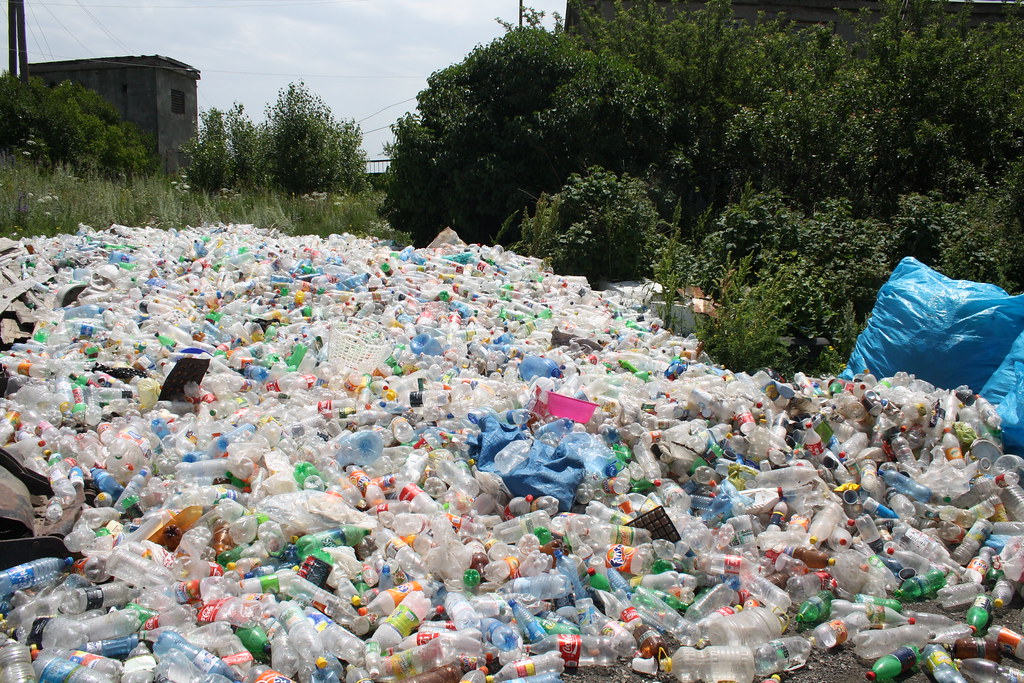
Recycling depends on trust.
Consumers trust that when they place something in a recycling bin, there is a reasonable chance it will actually be recycled. Businesses trust waste companies to handle materials the way they promise. Manufacturers increasingly rely on suppliers to provide recycled materials that meet specific standards. Investors and policymakers make decisions based on claims about recycling rates, recycled content, waste diversion and environmental benefits.
Most of the time, these claims are made in good faith.
But as environmental claims have become more valuable, the incentive to exaggerate them has grown as well. Somewhere between good intentions, aggressive marketing and outright deception lies an increasingly important question:
When does greenwashing become fraud?
Recyclable Does Not Always Mean Recycled
One of the biggest sources of confusion is the difference between something being recyclable and something actually being recycled.
The distinction matters.
According to the U.S. Environmental Protection Agency, approximately 35.7 million tons of plastic entered the municipal solid waste stream in 2018, while roughly 3 million tons were recycled—a recycling rate of 8.7 percent. EPA’s national material-specific plastics data still uses 2018 as its most recent comprehensive dataset.
That does not mean recycling does not work. Certain materials and individual plastic categories perform considerably better. It does mean that simply collecting something, putting a recycling symbol on it, or technically being capable of recycling it does not guarantee that the material ultimately gets turned into another useful product.
This is one of the central problems Real Cycle has focused on from the beginning: recycling should be measured by what actually happens to material, not merely by what bin it enters.
Environmental Claims Have Real Value
Today, words such as recyclable, recycled, circular, sustainable, green and eco-friendly can influence what consumers buy, which companies win contracts and where investment capital flows.
That makes accuracy important.
The Federal Trade Commission’s Green Guides were developed specifically to address environmental marketing claims. Among other things, the FTC advises companies not to make broad, unqualified claims such as “green” or “eco-friendly” when those claims cannot be substantiated.
The rules become particularly important around recycling.
For example, the FTC says marketers should qualify recyclable claims when appropriate recycling facilities are not available to at least 60 percent of the consumers or communities where a product is sold. For recycled-content claims, companies should accurately disclose how much of a product is made from recycled material when it is less than 100 percent.
These distinctions can sound technical, but they serve a simple purpose:
Consumers should understand what an environmental claim actually means.
Greenwashing Is Not Automatically Fraud
The word fraud should be used carefully.
Not every exaggerated environmental claim is fraud. Companies can misunderstand complicated regulations. Marketing departments can oversimplify technical information. Recycling systems themselves are complex, and what happens to a particular material can vary significantly by geography, contamination, economics and available processing infrastructure.
Greenwashing is also a broader concept than legal fraud.
But there is an important difference between being overly optimistic and knowingly telling customers something that is materially untrue.
There have been cases where that line was crossed.
One particularly relevant example involved a Colorado company called Executive Recycling. According to the U.S. Department of Justice, the company told customers that electronic waste would be recycled properly in the United States and handled in an environmentally responsible manner.
Instead, prosecutors established that substantial quantities of electronic waste were sold to brokers for export overseas. Company executives were convicted of fraud and international environmental crimes.
Customers weren’t simply paying someone to haul material away. They were paying for a specific environmental service that they were told would occur.
It didn’t.
That is no longer merely a debate about the definition of recycling. It demonstrates why transparency throughout the recycling chain matters.
Waste Fraud Is a Global Problem
The problem is not limited to misleading consumer advertising.
INTERPOL has documented fraud within international waste markets, particularly following major changes in global plastic-waste trade.
Its analysis identified document fraud and misdeclaration as recurring methods used in illegal waste activities. Examples include plastic waste falsely described as raw material, contaminated waste declared as non-hazardous material, false declarations about where waste is being sent, and documents indicating material was sent for recycling when it was actually disposed of elsewhere.
INTERPOL also reported increased use of counterfeit documents and fraudulent waste registrations in connection with illegal plastic-waste shipments.
These verification challenges are not unique to recycling; similar issues arise throughout global energy and commodity supply chains.
This illustrates a larger problem with recycling:
The farther material travels through a complicated supply chain, the more important verification becomes.
A bale of plastic may pass from a consumer to a hauler, a materials recovery facility, a broker, a processor, another processor and ultimately a manufacturer. International transactions can add additional companies, ports and jurisdictions.
If everyone simply accepts the previous party’s paperwork, an inaccurate claim can travel surprisingly far.
Traceability Must Become Part of Recycling Infrastructure
The answer is not to assume that environmental claims are false.
It is to make them increasingly verifiable.
Modern resource-recovery systems should eventually be capable of tracking far more than how many tons of material entered the front gate. We should be asking what the material contained, where it came from, where it went and what ultimately happened to it.
Did it become another product?
Was it converted into a useful raw material?
Was part of it rejected?
Was it exported?
Was it landfilled?
Was energy or another useful product recovered from material that could not economically be recycled?
These are far more useful questions than simply asking whether something was “recycled.”
This is also where technology can help. Modern industrial facilities increasingly generate enormous amounts of operational and supply-chain data. Better tracking systems, digital records, automated material identification and eventually artificial intelligence can make it easier to follow materials through increasingly complicated recovery systems.
The circular economy is therefore not merely a chemistry problem. It is also becoming a data and verification problem.
Honest Recycling Requires Honest Measurement
Environmental progress should be something we can measure.
If a package contains 30 percent recycled material, say 30 percent.
If a material is technically recyclable but recycling infrastructure is available only in limited locations, explain that limitation.
If 100 tons of waste enters a facility, measure what comes out.
If some material must be landfilled, acknowledge it.
And if a process successfully converts material that previously had no viable destination into fuels, chemicals, new materials or other useful products, measure that too.
Transparency does not weaken recycling.
It strengthens it.
Consumers are more likely to trust recycling when they understand what actually happens. Companies making real environmental progress benefit when competitors cannot gain an advantage through exaggerated claims. Investors can make better decisions when environmental performance can be independently evaluated.
And most importantly, better information helps us identify which solutions are actually reducing waste.
Getting Real About Recycling
At Real Cycle, we believe solving the waste problem requires moving beyond symbols, slogans and assumptions.
The objective should not be to make people feel as though material has been recycled.
The objective should be to put as much waste as possible into productive second uses—and to be able to demonstrate that it happened.
Most environmental claims are not fraud. Most people working in recycling are trying to improve a difficult and imperfect system.
But whenever environmental claims acquire economic value, there will be incentives to exaggerate them and, in some cases, deliberately falsify them.
The best defense is transparency.
Track the material. Measure the outcomes. Verify the claims.
If we want recycling to become more credible, more scalable and more successful, we have to know what really happens after something enters the bin.
That is how we get real about recycling.
ABOUT THE AUTHOR
About the Author: Greg Merle is President of FlexOnyx and a director and advisor to Real Cycle. His work focuses on advanced recycling, resource recovery, energy infrastructure, and practical solutions for reducing waste. Read Gregory Merle’s full bio.
Gregory Merle
Sources
U.S. Environmental Protection Agency — Plastics: Material-Specific Data
https://www.epa.gov/facts-and-figures-about-materials-waste-and-recycling/plastics-material-specific-data
U.S. Environmental Protection Agency — How Do I Recycle Common Recyclables?
https://www.epa.gov/recycle/how-do-i-recycle-common-recyclables
U.S. Environmental Protection Agency — Advanced Recycling of Plastics
https://www.epa.gov/plastics/advanced-recycling-plastics
Federal Trade Commission — Environmental Claims: Summary of the Green Guides
https://www.ftc.gov/business-guidance/resources/environmental-claims-summary-green-guides
Federal Trade Commission — Eco-Friendly and Green Marketing Claims
https://consumer.ftc.gov/articles/eco-friendly-and-green-marketing-claims
Federal Trade Commission — FTC Uses Penalty Offense Authority to Seek Largest-Ever Civil Penalty for Bogus Bamboo Marketing from Kohl’s and Walmart
https://www.ftc.gov/news-events/news/press-releases/2022/04/ftc-uses-penalty-offense-authority-seek-largest-ever-civil-penalty-bogus-bamboo-marketing-kohls
U.S. Department of Justice — Executive Recycling Company and Executives Sentenced for Fraud and International Environmental Crimes
https://www.justice.gov/usao-co/pr/executive-recycling-company-and-executives-sentenced-fraud-and-international
INTERPOL — Report Alerts to Sharp Rise in Plastic Waste Crime
https://www.interpol.int/News-and-Events/News/2020/INTERPOL-report-alerts-to-sharp-rise-in-plastic-waste-crime
INTERPOL — Emerging Criminal Trends in the Global Plastic Waste Market Since January 2018
https://www.interpol.int/content/download/15587/file/INTERPOL%20Report%20_criminal%20trends-plastic%20waste.pdf