REAL CYCLE FIELD INITIATIVE
No Plastics Left Behind
The Real Cycle Remote Shoreline Recovery Project
Real Cycle is developing a boat-based environmental field expedition to remove marine debris from hard-to-reach Caribbean shorelines — and document what it actually takes to move that waste from the beach to an appropriate recycling, recovery or disposal pathway.
Planning is underway for the first expedition, with potential locations in The Bahamas and Belize.
FIRST EXPEDITION CAMPAIGN
Help Launch the First Expedition
Your support will help Real Cycle put the first No Plastics Left Behind field expedition into action — from marine operations and cleanup equipment to transporting recovered debris, documenting what we find and reporting the results.
$1,100 raised & pledged of $25,000
Initial Campaign Goal: $25,000
Real Cycle is a U.S. 501(c)(3) nonprofit organization. Donations are tax-deductible to the extent permitted by law.
Real Cycle staff are volunteers and will not receive compensation from donations to this campaign.
Final project costs and allocations will depend on the expedition location, vessel requirements, permits, local partners and waste-handling arrangements.
MARINE DEBRIS DOESN’T ONLY WASH UP WHERE IT IS EASY TO REACH
Some of the hardest shorelines to clean are the hardest shorelines to access
Plastic and other marine debris can accumulate on isolated beaches, cays and coastal areas that have little or no road access. Even when the waste is visible, removing it can require boats, people, equipment, storage space and a realistic plan for what happens to the material afterward.
That last step matters. Collecting debris from a beach does not solve the waste-management problem by itself. The material still has to be transported, sorted and moved into an appropriate recycling, recovery or controlled-disposal pathway.
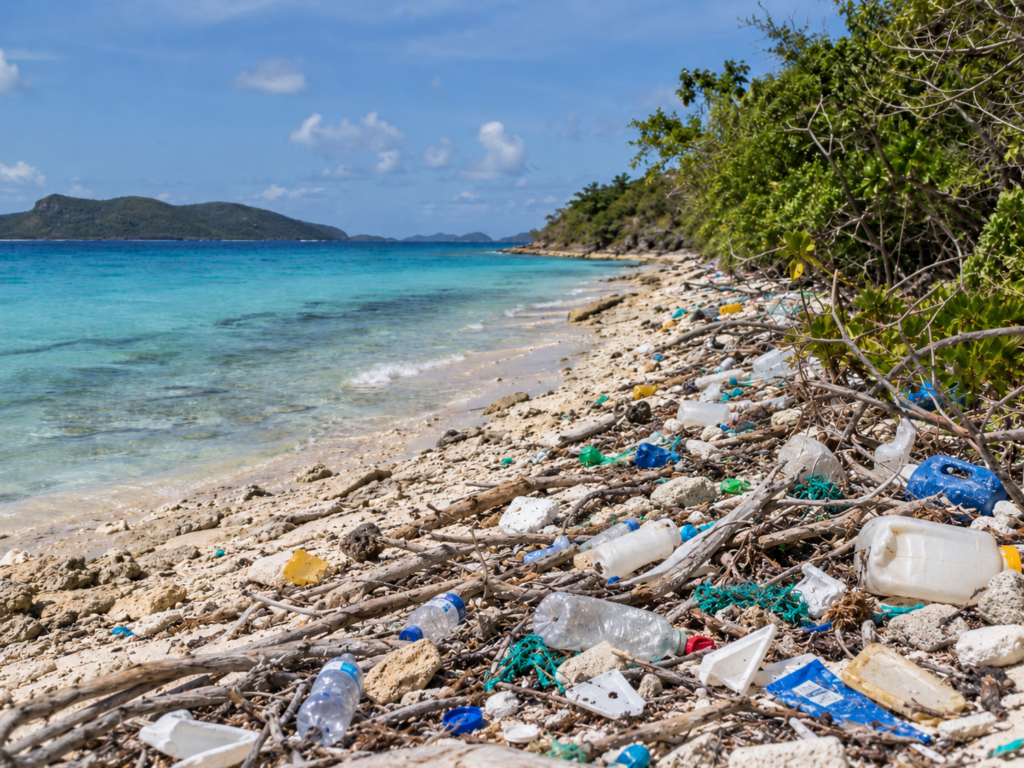
“Collection is not the end of the waste-management problem. It is the beginning of another one.”
THE ACCESS PROBLEM
Cleaning a remote beach is only half the job
On an accessible beach, collected debris can often be carried directly to a road, truck or nearby waste facility. On an isolated shoreline, every step becomes more complicated.
People and equipment have to reach the site by water. Recovered debris has to be carried from the beach to a small boat, transferred to a larger vessel, stored safely, brought to a legal landing point and then moved into the local waste-management system.
For bulky, lightweight materials such as plastic containers, foam, nets and other marine debris, the challenge is often not just weight. It is volume, handling, transportation and finding an appropriate destination for the material once it reaches shore.
Reach the Shoreline
Small boat or RIB access may be required where there is no practical road access.
Recover the Debris
Debris must be collected, documented, bagged or consolidated and moved safely off the beach.
Move It by Water
Recovered material may need to be transferred from shore to a dinghy, then onto a larger vessel for transport.
Find Its Final Destination
The material must ultimately reach an appropriate recycling, recovery or controlled-disposal pathway.
CLEANUP + FIELD STUDY
The expedition is designed to do more than remove debris
No Plastics Left Behind will pair practical shoreline recovery with field documentation of the logistics, costs and downstream decisions required to move recovered material responsibly.
Recover
Remove marine debris from selected hard-to-reach shoreline areas using a boat-based field operation.
Track
Document how material moves from the beach through transport, landing, sorting and its eventual waste-management pathway.
Report
Publish what worked, what did not, what it cost and what future remote-shoreline projects should plan for.
THE WASTE JOURNEY
The cleanup is not complete when the debris leaves the beach
A credible remote-shoreline project has to plan for the entire chain — not just collection.
Beach
Collect, document and consolidate.
Small Boat
Move material through shallow-water access.
Transport Vessel
Store and carry recovered debris safely.
Legal Landing Point
Unload where local rules and logistics allow.
Appropriate Pathway
Recycling, recovery or controlled disposal.
The final pathway will depend on the material recovered and the real waste-management options available at the selected expedition location. The project will not assume that every item can be recycled.
PLANNING THE FIRST EXPEDITION
The destination is still being evaluated
The Bahamas and Belize are potential locations for the first field expedition. No final site has been selected.
- Under evaluation
- Potential shoreline sites in The Bahamas and Belize.
- To be finalized
- Exact site or sites, vessel arrangements, local permissions and permits, local partners, landing logistics and downstream waste-handling options.
- Selection priority
- A location where meaningful debris recovery can be paired with a realistic, lawful plan for moving the material through the full waste chain.
HOW THE EXPEDITION WORKS
From planning to documented handoff
- Confirm the target shoreline, access conditions, permissions and downstream waste options before field work begins.
- Use appropriate marine access to bring people, safety gear and cleanup equipment to the selected shoreline.
- Collect, categorize and document recovered debris while consolidating it for transport.
- Move the material by small boat and/or larger vessel to an appropriate legal landing point.
- Transfer the material into the best available recycling, recovery or controlled-disposal pathway and document the outcome.
WHERE DONATIONS GO
Funding the work required to get debris all the way off the shoreline
Campaign funds may support the practical costs needed to plan, carry out, document and complete the first field expedition.
Marine Operations
Vessel charter or operating costs, small-boat access and fuel associated with reaching and servicing remote sites.
Cleanup & Safety Equipment
Collection supplies, protective equipment, bags, containers and field-safety needs.
Transport & Storage
Handling, temporary storage, landing and onward movement of recovered material.
Waste Handling
Sorting, processing, recycling, recovery or disposal fees where applicable.
Permits, Insurance & Field Logistics
Project-specific permissions, insurance, travel and local services required to carry out the work responsibly.
Documentation & Reporting
Field records, data capture, project documentation and preparation of the public post-expedition report.
No fixed percentage allocation is being represented at this stage. Final spending will depend on the selected location, vessel requirements, permits, local services and the waste pathway available there.
WHAT SUCCESS LOOKS LIKE
Measurable work, not vague impact language
- Targeted remote shoreline areas are safely accessed and marine debris is removed.
- Recovered material is documented and transported off the shoreline rather than simply consolidated in place.
- The downstream destination or disposal pathway is identified and recorded.
- Operational requirements, costs and bottlenecks are captured for future planning.
- Results are made public in a post-expedition report.
WHAT WE WILL PUBLISH
A public record of what actually happened
After the expedition, Real Cycle intends to publish a clear project report so supporters and partners can see what was done and what was learned.
- Final project location and field scope.
- Cleanup methods, site documentation and debris summary.
- The transportation and downstream waste journey.
- Project expenditures and major cost categories at an appropriate level of detail.
- Operational lessons and recommendations for future remote-shoreline work.
WHY THIS MATTERS
A cleaner shoreline matters. So does understanding what it takes to keep the recovered waste moving.
Remote marine debris is easy to photograph and difficult to manage. The physical cleanup is only one part of the problem; access, handling, transportation and downstream infrastructure determine whether recovered material can actually leave an isolated shoreline and reach an appropriate destination.
No Plastics Left Behind is intended to turn that challenge into practical field knowledge. By documenting the full chain alongside the cleanup itself, Real Cycle can produce a more useful record of what remote-shoreline recovery requires — and where the real constraints remain.
SUPPORT THE FIRST FIELD EXPEDITION
Help move No Plastics Left Behind from planning into the field
Your donation will help fund the practical work of reaching remote shorelines, recovering marine debris, moving it through an appropriate waste pathway and documenting the results.
PayPal will open in a new tab.
Real Cycle is a U.S. 501(c)(3) nonprofit organization. Donations are tax-deductible to the extent permitted by law. Real Cycle staff are volunteers and will not receive compensation from donations to this campaign.
Project status: The first expedition is in planning. Potential locations include The Bahamas and Belize; the final location, permits, vessel arrangements, local partners and downstream waste pathway have not yet been finalized.